Mesh vs non-mesh – When planning hernia surgery, patients often ask one key question: Should I choose mesh or non-mesh repair? Let’s break it down clearly so you can make an informed decision.
What Is Mesh Repair?
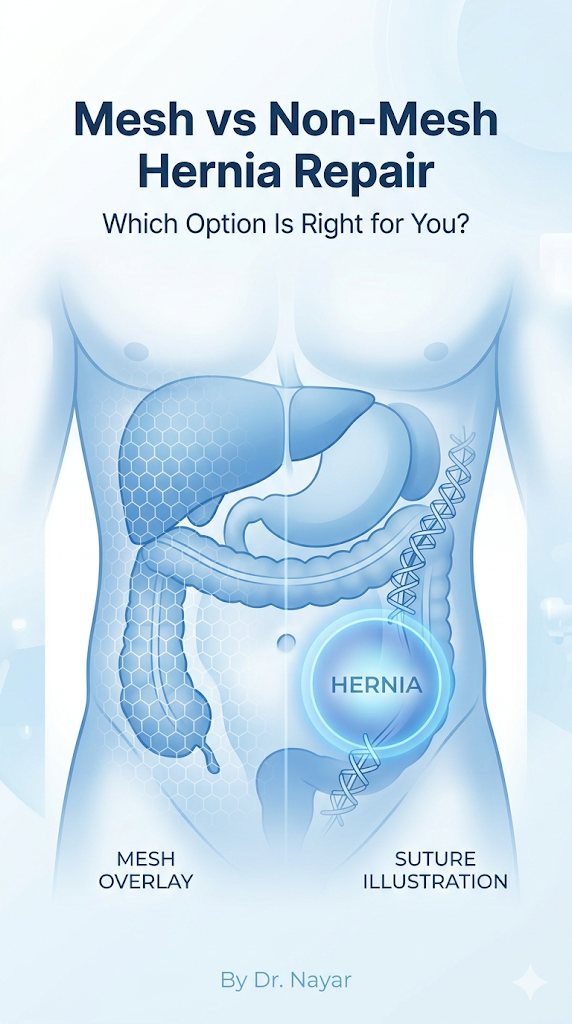
In mesh repair, surgeons place a synthetic mesh over the weakened area. This mesh strengthens the abdominal wall and reduces tension on surrounding tissues. As a result, the risk of recurrence becomes significantly lower. Moreover, most modern hernia surgeries use this technique because it offers durability and long-term support.
What Is Non-Mesh Repair?
In contrast, non-mesh repair uses stitches to close the defect. While this method avoids implants, it places more strain on the surrounding tissues. Therefore, the chances of recurrence tend to be higher, especially in larger hernias.
Key Differences
- Durability: Mesh provides stronger and longer-lasting support
- Recovery: Mesh repair often allows faster healing
- Recurrence: Lower with mesh compared to non-mesh
- Suitability: Non-mesh works best for small, uncomplicated hernias
Are There Risks with Mesh?
Like any medical device, mesh carries some risks. In rare cases, patients may experience infection, discomfort, or mesh-related complications. However, with proper surgical technique and hygiene, these risks remain minimal.
Which Option Is Right for You mesh vs non-mesh?
Ultimately, the best choice depends on several factors. These include the size of the hernia, your overall health, and any previous surgeries. Additionally, your daily activity level also matters. For example, people who lift heavy weights or perform physical labor often benefit more from mesh repair due to its strength.
Additionally, long-term outcomes also play an important role in decision-making. While mesh repair offers durability, advancements in surgical techniques have also improved the success rates of selected non-mesh procedures. For example, in young patients with small primary hernias, a well-performed non-mesh repair can still provide satisfactory results. On the other hand, for larger or recurrent hernias, mesh reinforcement significantly reduces the chances of failure. Therefore, instead of a one-size-fits-all approach, surgeons carefully evaluate each case. By doing so, they ensure that the chosen method balances safety, comfort, and long-term effectiveness for the patient.
Conclusion
In summary, mesh repair remains the gold standard for most hernia cases. However, every patient is different. Therefore, a personalized consultation ensures the safest and most effective outcome.