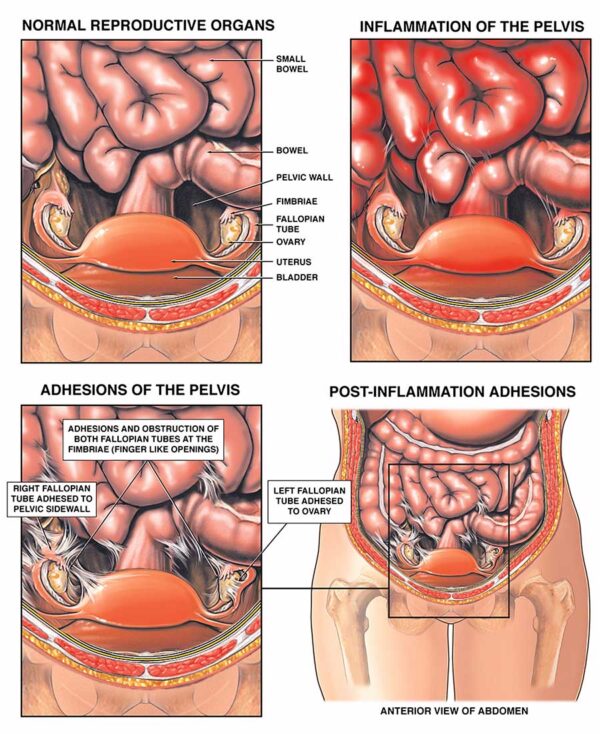
Adhesions after abdominal surgery; Abdominal surgery can successfully treat many medical conditions. However, some patients develop internal scar tissue known as adhesions. Although adhesions often remain harmless, they can occasionally cause discomfort and serious complications.
Therefore, understanding adhesions helps patients recognize symptoms and seek timely medical care when necessary.
What Are Adhesions?
Adhesions are bands of scar tissue that form between organs and tissues inside the abdomen. Normally, abdominal organs move smoothly against one another. However, adhesions can cause tissues that are usually separate to stick together.
Why Do Adhesions Form?
Adhesions commonly develop after:
- Abdominal surgery
- Infections
- Inflammation
- Trauma
In fact, abdominal surgery remains the most common cause.
Do Adhesions Cause Symptoms?
Many patients never experience symptoms. However, some individuals develop:
- Chronic abdominal pain
- Bloating
- Digestive discomfort
- Nausea
- Bowel obstruction
Furthermore, symptoms may appear months or even years after surgery.
When Do Adhesions Become Dangerous?
The most serious complication is bowel obstruction. In this situation, adhesions block the normal movement of intestinal contents.
Warning signs include:
- Severe abdominal pain
- Vomiting
- Abdominal swelling
- Inability to pass stool or gas
These symptoms require urgent medical attention.
Can Adhesions Be Prevented?
Surgeons use careful techniques and minimally invasive approaches whenever possible. Although prevention is not always possible, modern surgical methods help reduce risk.
Treatment Options
Most adhesions do not require treatment. However, severe symptoms or bowel obstruction may require surgery.
At the same time, surgeons carefully balance the benefits and risks because additional surgery can sometimes create new adhesions.
How Adhesions Can Affect Future Surgeries
Another important aspect of adhesions is their impact on future surgical procedures. When scar tissue forms between organs and surrounding tissues, it can make subsequent operations more challenging. For instance, adhesions may obscure normal anatomy, making it harder for surgeons to safely access the surgical area. As a result, procedures can take longer and may carry a slightly increased risk of injury to nearby organs such as the intestines, bladder, or blood vessels. Furthermore, patients who have undergone multiple abdominal surgeries often have a higher likelihood of developing extensive adhesions. This is one reason why surgeons carefully evaluate surgical history before planning any operation. Fortunately, advances in minimally invasive techniques, including laparoscopic surgery, have helped reduce the formation of adhesions in many cases. Additionally, surgeons may use specialized adhesion barriers during certain procedures to minimize scar tissue development. Therefore, maintaining regular follow-up appointments and informing your surgeon about any previous abdominal surgeries can help ensure safer treatment planning and better long-term outcomes.
Conclusion
Adhesions are a common consequence of abdominal surgery. While many remain symptom-free, some patients develop significant complications. Therefore, recognizing symptoms early and seeking medical advice when needed can help ensure timely treatment and better outcomes.